
 Let’s meet one of our FocusedKids Brain Buddies: Guard Dog!
One of the most powerful components of the FocusedKids model is our use of puppets. Puppets feel safe, approachable, and nonthreatening to children. Rather than having an adult speak directly to a child about their behavior, a puppet like Guard Dog can act as a gentle buffer—and, of course, he’s much cuter!
When children interact with Guard Dog, they are often more willing to engage, reflect, and talk about what is happening in their brains and bodies. He creates a playful, safe way for children to begin understanding their emotions, reactions, and what their brain may be trying to tell them.
A Key Player in the Brain
Guard Dog represents the amygdala, the part of the brain that is always looking out for us and asking, “Am I safe?” Just like a real guard dog, his job is to protect us.
The amygdala develops very early—beginning before birth—and is already hard at work when children enter the world. During the early years, children are constantly learning what is safe, what feels threatening, and how to respond to the world around them. Their Guard Dog is learning his job, too. At the same time, the parts of the brain responsible for reasoning, impulse control, and managing big emotions are still developing.
That is why young children need us.
When something feels scary, frustrating, overwhelming, or simply like too much, Guard Dog may sound the alarm. This can look like yelling, crying, running away, shutting down, hitting, or having a hard time listening and thinking clearly.
One of the most important things we teach children is that Guard Dog isn’t bad—he’s trying to protect us. Sometimes he just gets a little too good at his job!
Calm Brains Help Calm Brains
Children learn regulation through co-regulation. Before they can consistently calm themselves, they rely on calm, connected adults to help their brains and bodies settle.
If a child’s Guard Dog is activated and the adult’s Guard Dog is activated too, it becomes much harder for either person to think clearly or solve the problem. In those moments, our first job as adults isn’t to lecture, reason, or fix—it’s to regulate ourselves and reconnect with the child.
Once Guard Dog feels safe and begins to settle, the thinking parts of the brain can come back online. That is when children are better able to listen, problem-solve, reflect, and learn.
This simple but powerful message helps parents understand what is happening in their child’s brain during a meltdown and how to support them in a safe and loving way.
Try It at Home
When your child is having a big reaction, start by checking in with your own Guard Dog.
Ask yourself: Can I soften my voice? Slow my breathing? Get down on their level? Connect before I correct?
Then help your child notice what is happening:
- “It looks like your Guard Dog is working really hard right now.”
- “What do you notice in your body?”
- “Let’s help your Guard Dog know that you’re safe.”
Try taking three slow breaths together, adding some movement, offering a hug or quiet connection, or simply staying close until the big feeling begins to pass.
Over time, these moments of co-regulation help children build the skills they need for self-regulation.
The goal isn’t to make Guard Dog disappear. We want children to learn to notice him, understand him, and know what helps him settle.
Resources:
- Brain Basics: 3 Key Parts of the Brain
- Brain Lesson: Amygdala
- Coloring Page: Brain Buddy Puppets
- Worksheet: Finding My Calm
- Poster: Key Players in the Brain
About the Author
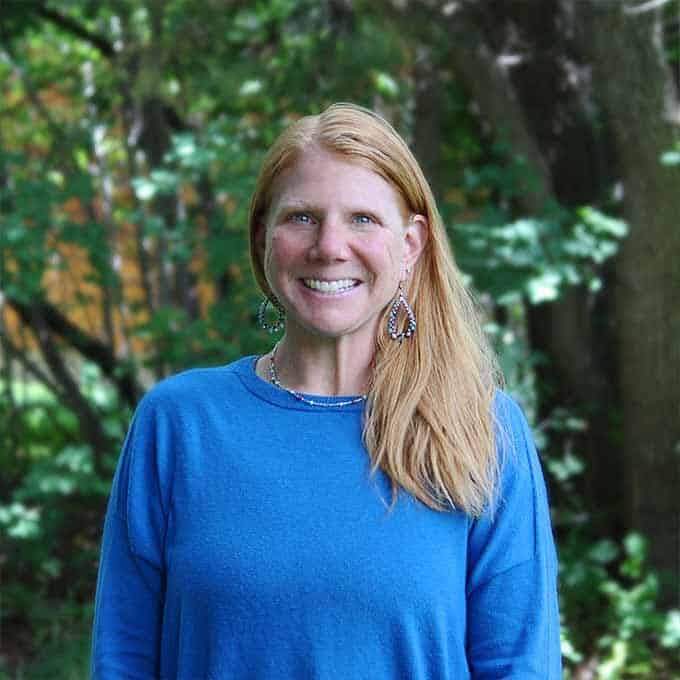
Amanda Petersen
Amanda is the Executive Director of FocusedKids. As a licensed professional counselor, parent, and former teacher, she has a wealth of experience and knowledge that she is able to rely on in guiding the organization.


